

Greenfield projects
We lead a Rust project end-to-end: architecture, implementation, deployment, and the documentation your team needs to keep maintaining it.
When mostly works isn't good enough.
When mostly works isn't good enough.
When the cost of a bug is measured in dollars, downtime, or trust, the language you choose matters. Rust isn't the right tool for every job, but for the systems where performance and correctness aren't optional, like payment processing, cryptographic infrastructure, high-throughput data pipelines, embedded systems, and latency-sensitive services, its memory safety guarantees and zero-cost abstractions make a real difference.
We reach for Rust when the workload demands it: high-performance services where every millisecond and every megabyte counts, mission-critical components where memory bugs would mean security incidents or data corruption, and systems-level work like daemons, agents, command-line tools, and embedded firmware. We also use it for migrations from slower or less safe stacks, where the operational cost has outgrown the convenience of the original choice.
Most teams don't have the appetite for a full rewrite, and they shouldn't. We've helped teams migrate hot paths from other languages to Rust without rewriting the rest of the system. Rust plays well at boundaries, so you can introduce it where it earns its keep and leave the parts of your stack that already work alone.
The work is mostly about choosing the right boundaries: which interfaces to preserve, where to cut the seam, how to validate the migration produced what was promised. Done well, you end up with a faster, safer hot path and a system your team still recognizes.
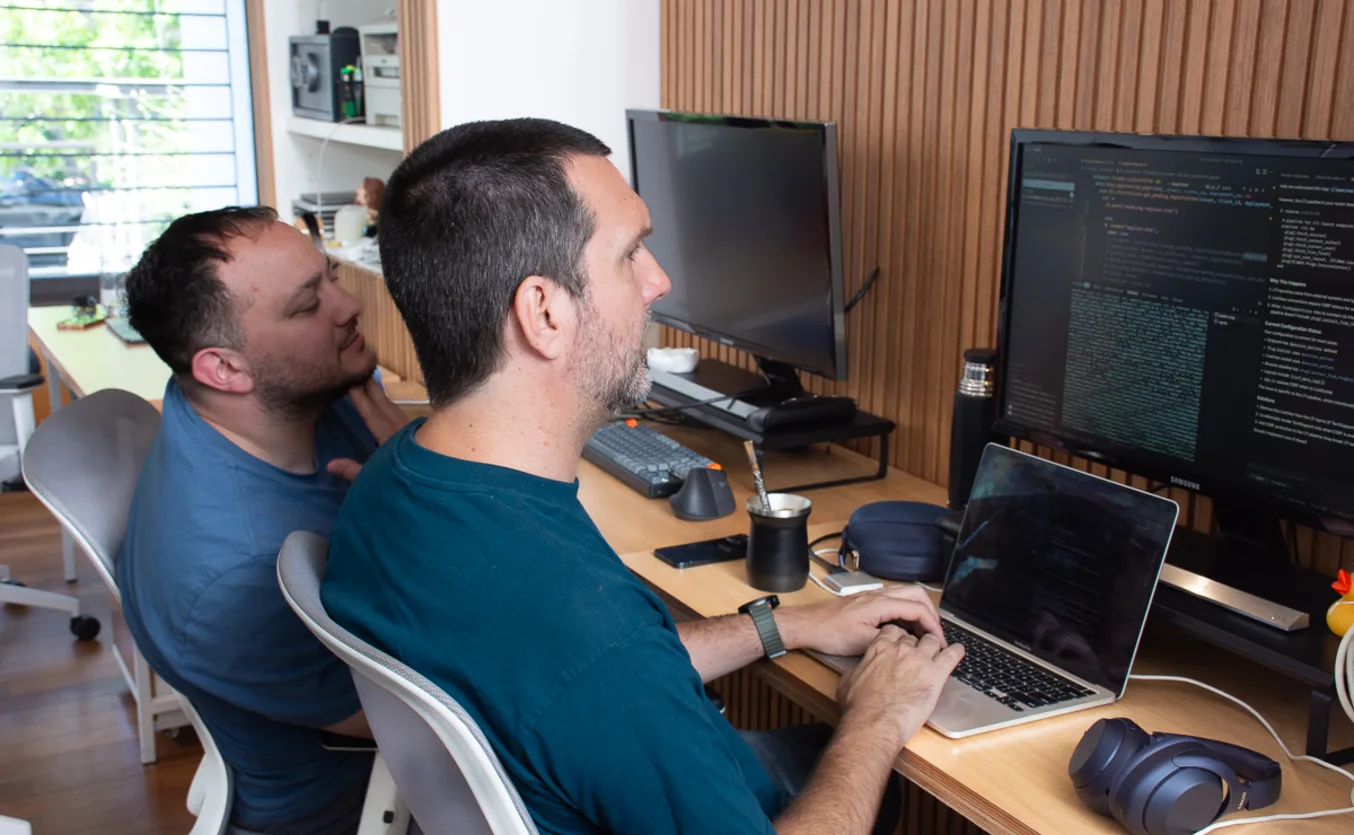
We won't talk you into Rust if it's the wrong fit. If the bottleneck in your product is shipping features, not raw performance or safety, you'll get more value from a different stack. We'd rather tell you that up front than bill you for the discovery.
We lead a Rust project end-to-end: architecture, implementation, deployment, and the documentation your team needs to keep maintaining it.
Senior Rust engineers join your existing team, work in your processes, and leave it stronger than they found it.
We help your team make the call on whether Rust is the right tool before you commit, with honest tradeoff analysis from people who've shipped it.
Ready to ship systems where reliability and safety aren't negotiable?
When the cost of a bug is measured in dollars, downtime, or trust, the language you choose matters. Rust isn't the right tool for every job, but for the systems where performance and correctness aren't optional, like payment processing, cryptographic infrastructure, high-throughput data pipelines, embedded systems, and latency-sensitive services, its memory safety guarantees and zero-cost abstractions make a real difference.
We reach for Rust when the workload demands it: high-performance services where every millisecond and every megabyte counts, mission-critical components where memory bugs would mean security incidents or data corruption, and systems-level work like daemons, agents, command-line tools, and embedded firmware. We also use it for migrations from slower or less safe stacks, where the operational cost has outgrown the convenience of the original choice.
Most teams don't have the appetite for a full rewrite, and they shouldn't. We've helped teams migrate hot paths from other languages to Rust without rewriting the rest of the system. Rust plays well at boundaries, so you can introduce it where it earns its keep and leave the parts of your stack that already work alone.
The work is mostly about choosing the right boundaries: which interfaces to preserve, where to cut the seam, how to validate the migration produced what was promised. Done well, you end up with a faster, safer hot path and a system your team still recognizes.
We won't talk you into Rust if it's the wrong fit. If the bottleneck in your product is shipping features, not raw performance or safety, you'll get more value from a different stack. We'd rather tell you that up front than bill you for the discovery.
We lead a Rust project end-to-end: architecture, implementation, deployment, and the documentation your team needs to keep maintaining it.
Senior Rust engineers join your existing team, work in your processes, and leave it stronger than they found it.
We help your team make the call on whether Rust is the right tool before you commit, with honest tradeoff analysis from people who've shipped it.

Exploring the compelling reasons to consider rewriting legacy systems in Rust, including its safety features, concurrency model, modern tooling, and incremental migration strategies.
A comprehensive guide to asynchronous programming in Rust, covering concurrency vs parallelism, threads, async runtimes like Tokio, and when to choose async over synchronous approaches.
Ready to ship systems where reliability and safety aren't negotiable?

